
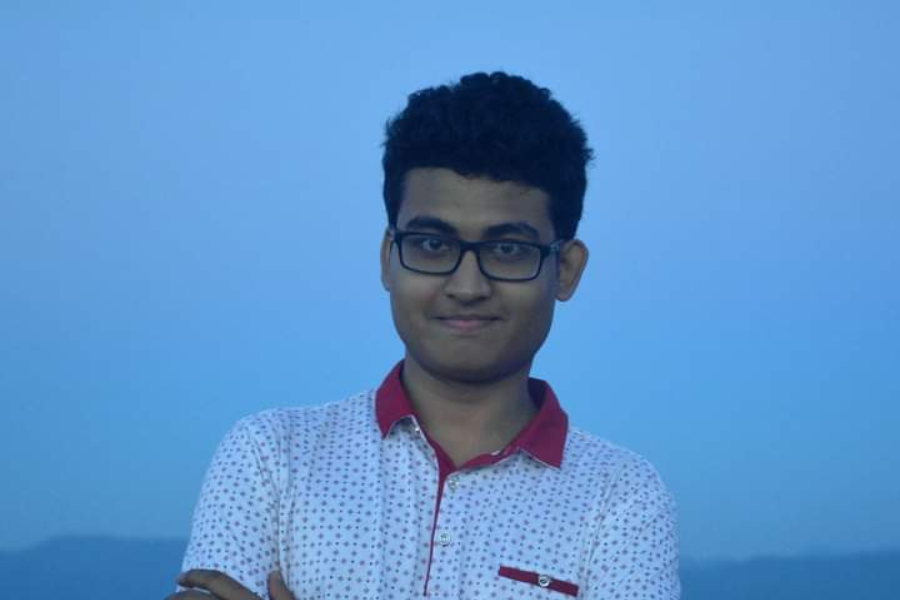
Samiul Kaiser
”Advancing climate solutions for vulnerable communities”
College: Engineering
Degree Program: Civil and Environmental Engineering
Degree: Doctoral
Award: ForEverglades Research Enhancement Grant (2025)
Motivation to pursue a graduate degree
I was inspired to pursue a graduate degree because I wanted to use science to help communities better prepare for climate-related risks like extreme rainfall and flooding. My interest grew as I realized how climate change is intensifying weather events and affecting vulnerable regions such as the U.S Gulf Coast. I chose Florida State University because of its strong research focus on climate, resilience, and environmental systems. FSU also offers a collaborative environment where I can work on real-world challenges, including research that supports Everglades restoration and climate resilience.
Importance and/or impact of research and work
I study extreme rainfall and how climate change is making short, intense extreme rainfall events more frequent, especially in vulnerable regions like the U.S. Gulf Coast. My research focuses on improving future rainfall projections so communities, water managers, and restoration programs can better prepare for flooding and environmental impacts. Through the research funding from Pensacola and Perdido Bays Estuary Program (PPBEP), the National Academies of Sciences, Engineering, and Medicine (NASEM), Department of War (DoW), and the ForEverglades Fellowship, I am developing high-resolution future rainfall projections that support smarter water management and ecosystem protection in vulnerable coastal regions like the Everglades. This work is important because more accurate climate information helps protect infrastructure, natural habitats, and coastal communities facing increasing climate risks.
Career aspirations
My career goal is to become a climate and water resources scientist who develops practical solutions for flood risk, climate resilience, and ecosystem protection. I want my research to support real-world decision-making for vulnerable regions like Florida and coastal communities facing increasing extreme weather. In the long term, I hope to work closely with agencies and interdisciplinary teams to improve climate-informed planning and environmental sustainability.
Advice for anyone considering graduate school
Choose a research area that genuinely motivates you and has real-world impact, not just academic value. Stay curious, seek mentorship, and be open to interdisciplinary learning and collaboration. Most importantly, be patient and persistent, because graduate school is a long journey that helps you grow both professionally and personally.
Accomplishments during graduate career
I am most proud of receiving the ForEverglades Research Enhancement Grant and conducting research that directly supports climate resilience and environmental restoration in Florida. I have also presented my research at major conferences and workshops including Americal Geophysical Union (AGU), Americal Meteorological Society (AMS), American Society of Civil Engineers (ASCE-EWRI), National Oceanic and Atmospheric Administration (NOAA), and Department of Defense (DoD) workshops, and worked on projects that connect climate science with real world decision making. The fellowship is especially meaningful to me because it recognizes the real-world impact of my work and allows me to contribute to protecting the Everglades and other vulnerable ecosystems.