
Oluwaseun Jegede - Best Organized Op-Ed
In June, people in Orlando lit candles for two sisters. Tiana Watts was 2. Jaliyah Watts was 11 months old. Deputies said their father shot them. An expert told the Tampa Bay Times, "Children are another weapon that is used by the abuser."
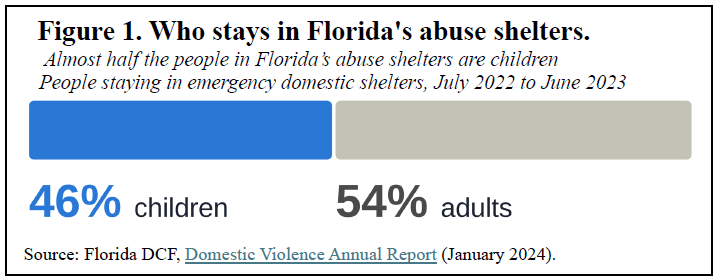
Deaths like these are rare. Kids living with hurt at home are not. Almost half of the people in Florida's abuse shelters are kids (Figure 1). In one year, shelters had to turn down 6,620 requests for a bed. They did not have the room or the money.
Children do not have to be hit to be hurt. Kids who see or hear a parent get hurt are more likely to feel sad, scared or on edge. Some kids carry it into their own grown-up love lives. They may hurt a partner, or be hurt by one. But this is not certain. Many kids do well, most of all when a safe parent stays close. Helping the safe parent helps the child too.
A parent hurting the other parent is one of the most common things callers report to Florida's child abuse hotline.
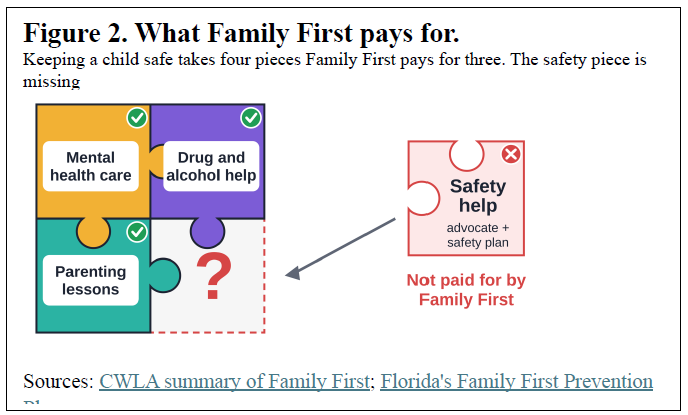
In 2018, Congress passed a law called Family First. It gives states money to keep kids safely at home, not in foster care. But the law pays for just three kinds of help. They are mental health care, drug and alcohol treatment, and parenting lessons. Florida uses all three.
These can help a family where there is violence. But none of them is made to stop the violence. That is the job of a trained helper called an advocate. An advocate helps a parent make a safety plan. Where can we go? Who can we call? How can a judge keep the abuser away? This help is not on the Family First list (Figure 2).
A 2019 report says states can pick Family First programs that fit these families. But advocates and safety plans need other money. In 2025, Congress voted on this money again. It did not change the list.
Florida already has a team for this: the Child Protection Investigation Project. It puts advocates next to child abuse workers in all 67 counties. The state says it helped 20,815 children stay home with the safe parent in 2023-24. But the team is stretched. Child abuse workers asked it for help 12,103 times, up 44 percent in one year. Its money went up only 1 percent. Family First cannot pay to close that gap.
So what should leaders do?
First, Florida can act now. Lawmakers can pay for more advocates and shelter beds.
Second, only Congress can change the list. Florida's leaders there should push to add safety help.
This summer, Florida made punishment tougher for people who abuse again. Punishment comes after someone is hurt. Help comes before. We cannot know what might have saved Tiana and Jaliyah. But kids are safer when the parent who keeps them safe gets help early.